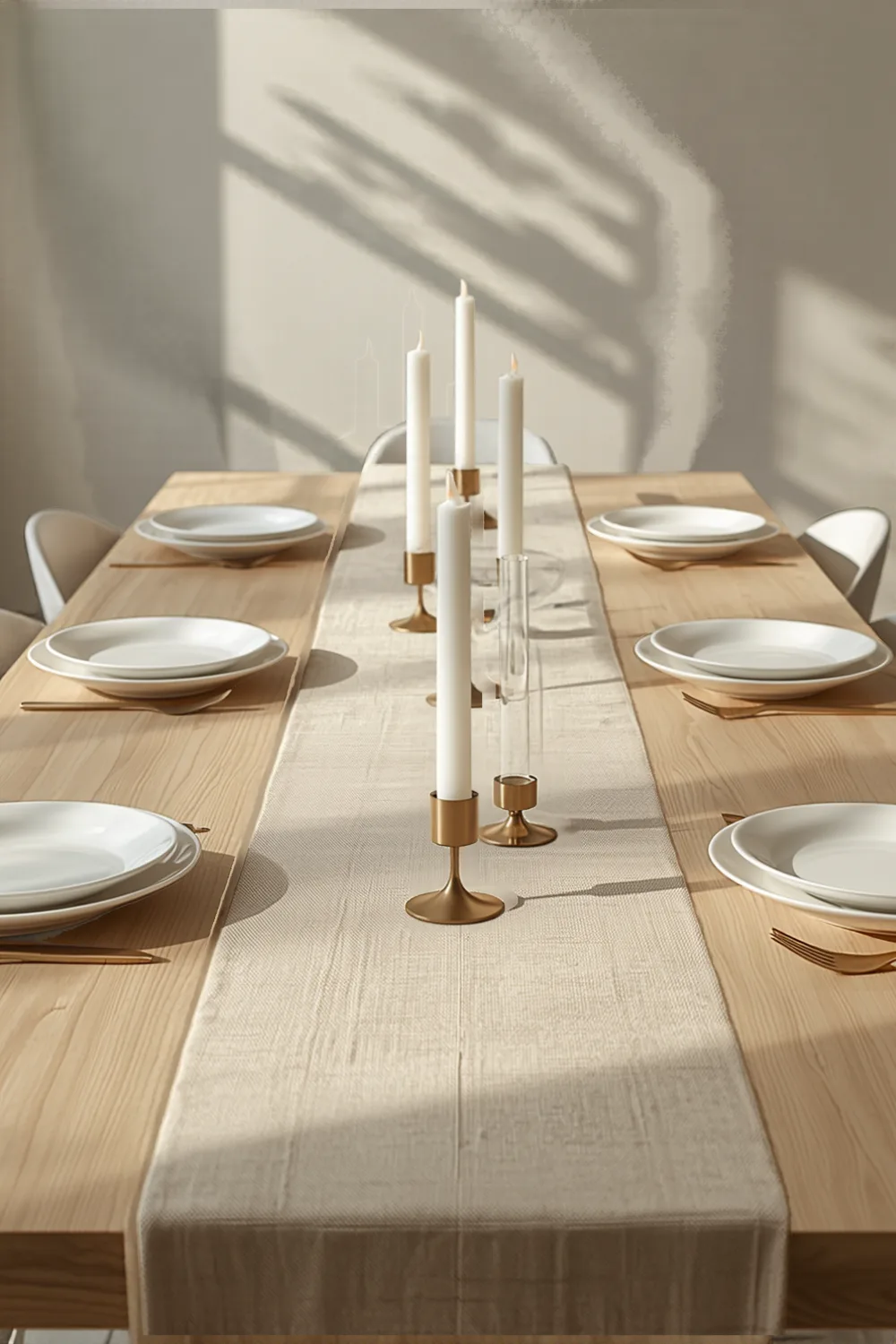
5 Minimalist Thanksgiving Table Settings: Fixing the Problems Every Host Runs Into
Quick summary:
| Problem | Fix |
| Can’t see across the table | 12-inch sightline rule |
| No room for the turkey | Flat, slim decor layout |
| Scented candles fighting the food smell | Unscented only, real-wax flameless |
| Fake-looking cheesecloth runner | Spritz + hand-scrunch, never iron |
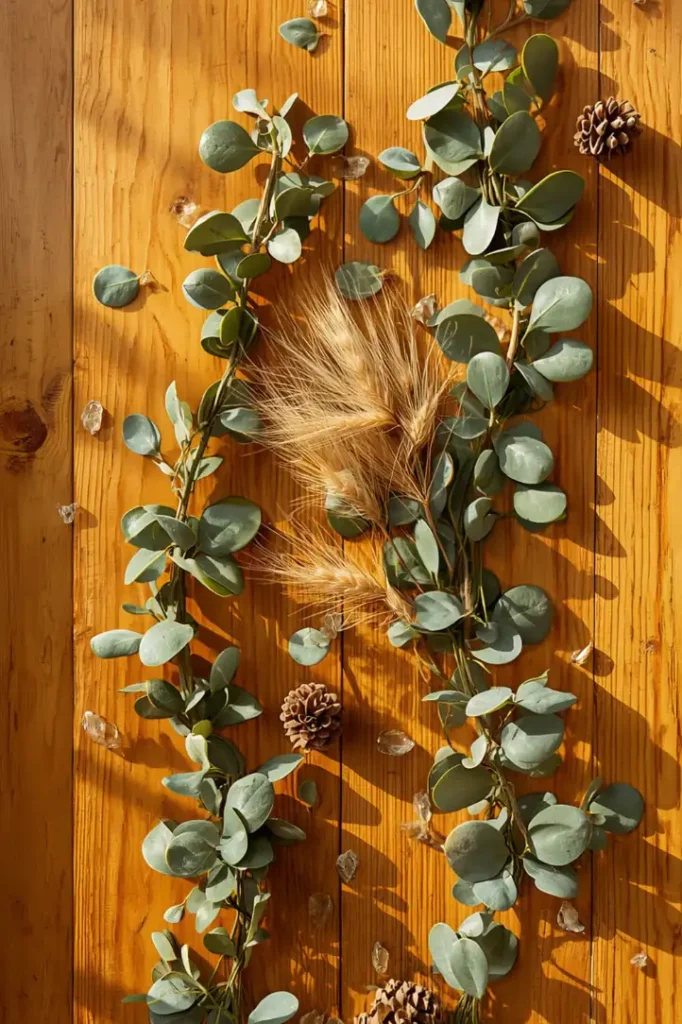
| Thin, obviously plastic garland | Double-layer with real pinecones tucked in |
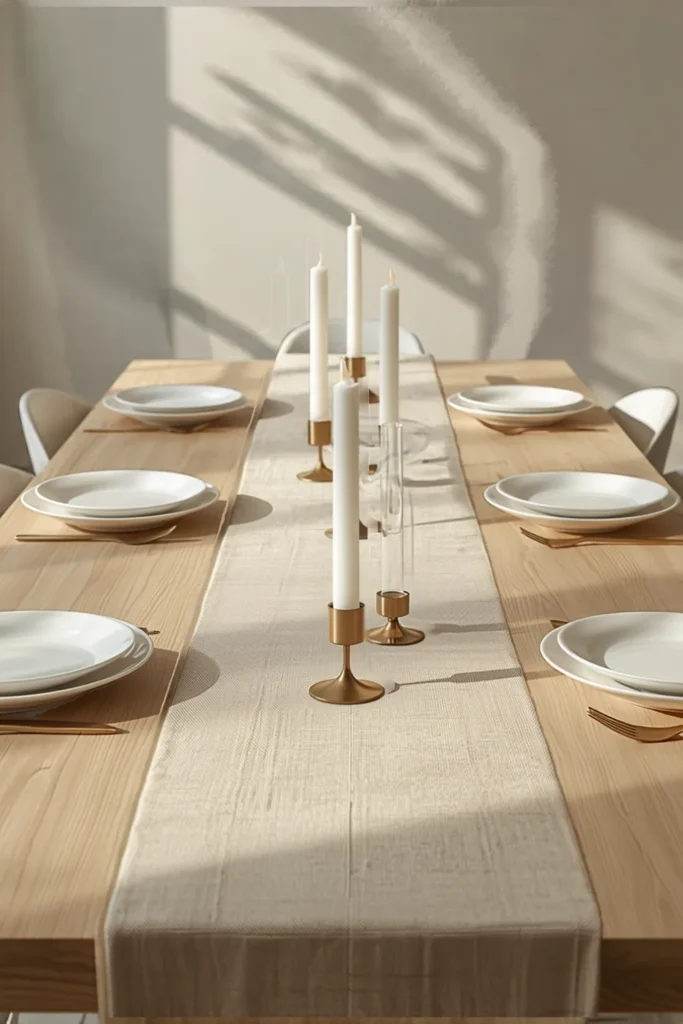
Most Thanksgiving table guides are styled for a photo, not for an actual dinner with eight people, three side dishes, and a turkey that needs somewhere to land.
The problems below come from what actually goes wrong once real food and real guests show up—and the fixes come from people who’ve already hit these problems.
The 12-Inch Sightline Rule
The single most common hosting complaint isn’t about the decor itself—it’s that nobody can see or talk to the person across the table because the centerpiece is in the way.
- Rest your elbow on the table and make a fist: that’s roughly 12 inches, and it’s your ceiling for anything placed in the center of the table.
- A tall glass vase, a stack of pumpkins, or an upright floral arrangement almost always breaks this rule.
- If you already own a tall piece you love, move it to a sideboard or mantel instead of the table center—you get to use it without blocking a single conversation.
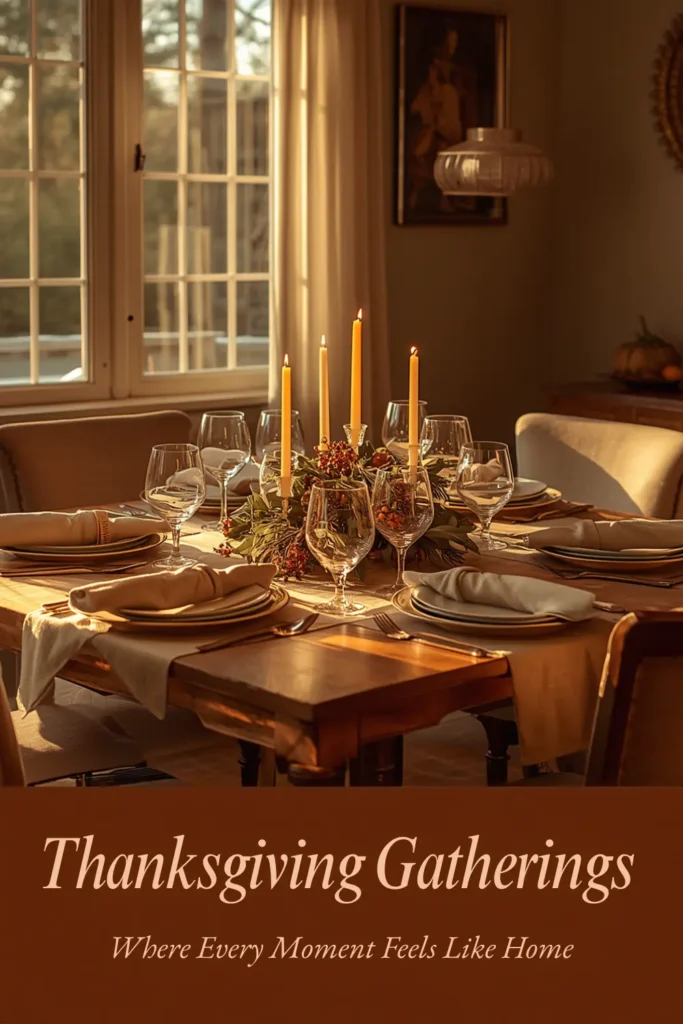
If you’re using flameless tapers, check two things before buying: that they’re coated in real paraffin wax (cheap plastic-look candles read as obviously fake up close) and that the light is a soft warm glow around 2700K—not the deep orange or neon-yellow tone a lot of budget flameless candles put out.
1. Build Flat, Not Tall—Leave Room for the Food
Centerpieces get styled on an empty table, then nobody accounts for what happens when the turkey, mashed potatoes, gravy boat, and three side dishes actually arrive.
- Use a flat runner and slim, low candlesticks instead of anything with a wide base or tall footprint.
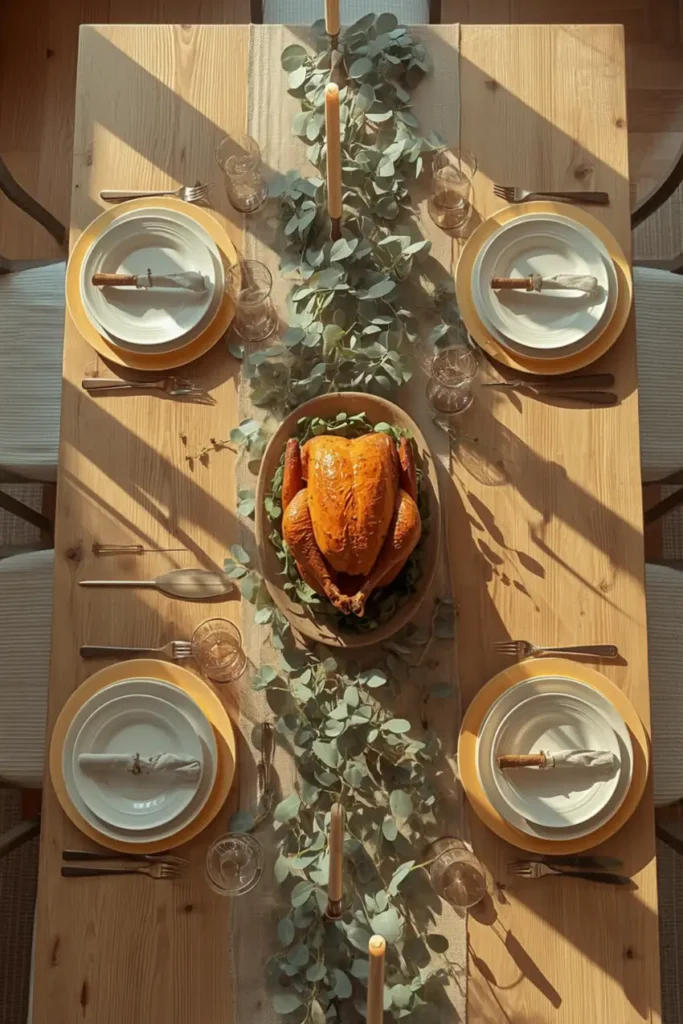
- Treat the table center as food real estate first, decor second—the decor should be able to shrink or shift without ruining the look.
- Move anything bulky (pumpkins, large vases, serving stands you’re not using yet) to a sideboard or buffet before the meal starts, not after everyone’s already seated and shuffling dishes around a cluttered table.
2. The Candle Rules Most Hosts Get Wrong
Skip scented candles on the dining table entirely. Vanilla, cinnamon, or apple-cider scents clash with the actual smell of roasted turkey and gravy, and the combination reads as artificial rather than cozy once real food is on the table. Save scented candles for another room.
Get ones with a remote and an auto-timer. Reaching under the table to click each candle on while guests are already seated is a small but real annoyance—a 6-hour auto-timer means they’re already lit and warm before anyone sits down.
3. The Cheesecloth Runner Trick Nobody Irons Correctly
A cheesecloth or gauze runner comes out of the package with awkward creases—and ironing it is the instinct that ruins it.
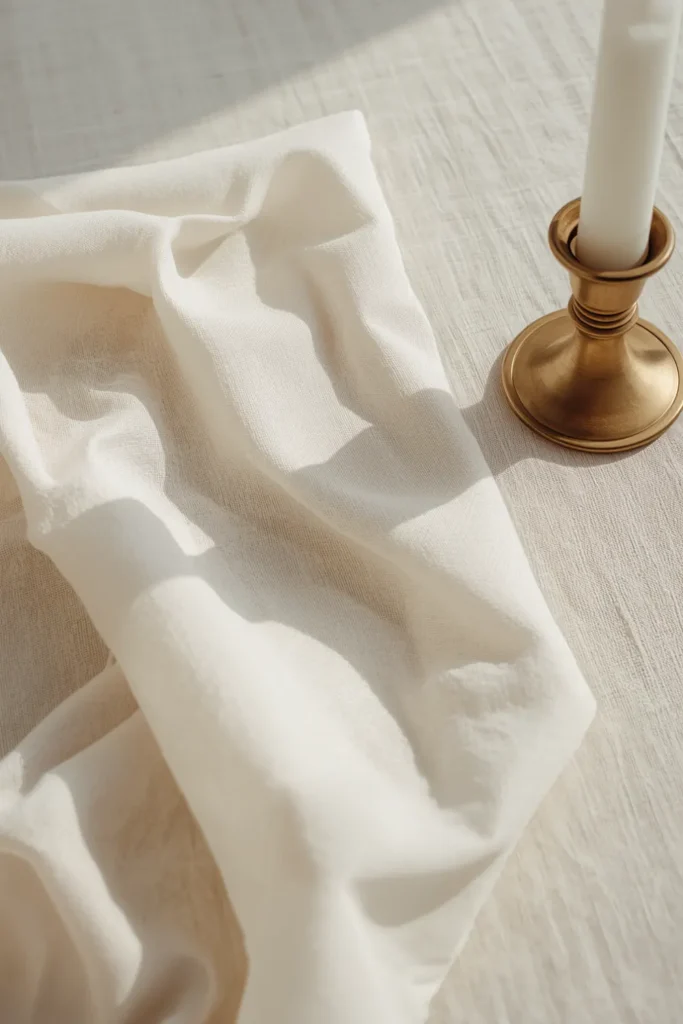
Ironing flattens out the natural rumpled texture that makes this material look intentionally rustic instead of just wrinkled.
Instead, lightly mist it with water and scrunch it by hand directly on the table—this restores the texture without stiffening the fabric.
These runners also tend to slide off the table edges throughout the meal. Weight each end down with something heavy—a ceramic bowl or a brass candle holder works—and doubles as part of the decor instead of looking like a fix.
Making Faux Garland Actually Look Real
A single strand of faux eucalyptus garland almost always looks thin and sparse on a full-length table—and the plastic stems behind the leaves show through at a glance.
Take two inexpensive strands and twist them together rather than buying one thicker (and pricier) version. Doubling up hides the gaps a single strand leaves behind.
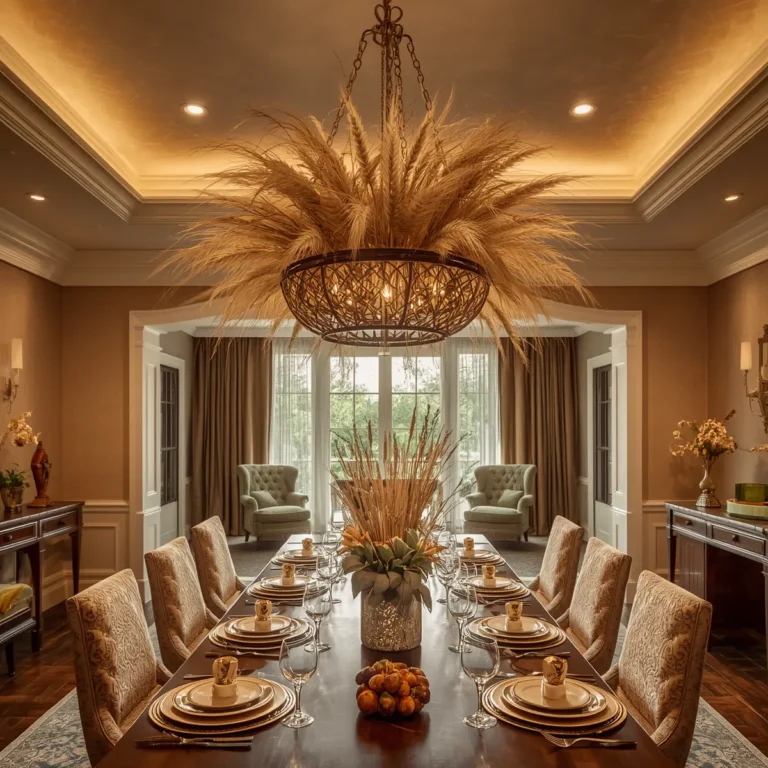
Tuck dried wheat stems or real pinecones into the gaps between the twisted strands. The mix of real, textured material breaks up the uniform plastic look and is what actually sells the “natural” effect, not the garland alone.
A Table Built to Actually Host, Not Just Photograph
None of this requires spending more—it requires designing around what actually happens at a Thanksgiving table: people need to see each other, the food needs somewhere to go, and the materials need to hold up under real use, not just a staged photo.
Solve those three problems first, and the table looks finished without needing anything else added to it.