Modern Home Decor & Interior Design Ideas for Stylish USA Homes: 12 Tray Ceiling Ideas With Cove Lighting
A flat ceiling covers a room. A tray ceiling design with the right lighting changes how the whole room feels—taller, warmer, and more finished. None of these need a full gut renovation.
Quick Summary: Which Design Fits Your Space?
- Single Ring Tray: Dining rooms, one clear focal point
- Concentric Circles: Rooms with 9ft+ ceilings
- Pendant Cluster in a Recess: Kitchens, breakfast nooks
- Angular/Diamond Tray: Modern, transitional homes
- Continuous Cove Strip: Any tray — this one’s non-negotiable
- Faux Tray for Renters: Apartments, rental homes (no drywall work)
- Rectangular Border: Media walls, art walls, headboards
- Radial Sunburst Lines: Entryways, dining rooms
- Subtle Perimeter Cove: Small rooms under 150 sq ft
- Matched Color Temperature: Rooms with pure white ceilings
- Dimmer Switch: Every design on this list
- One Shape + One Technique: Avoiding an overdesigned look

1. Start With a Single Ring
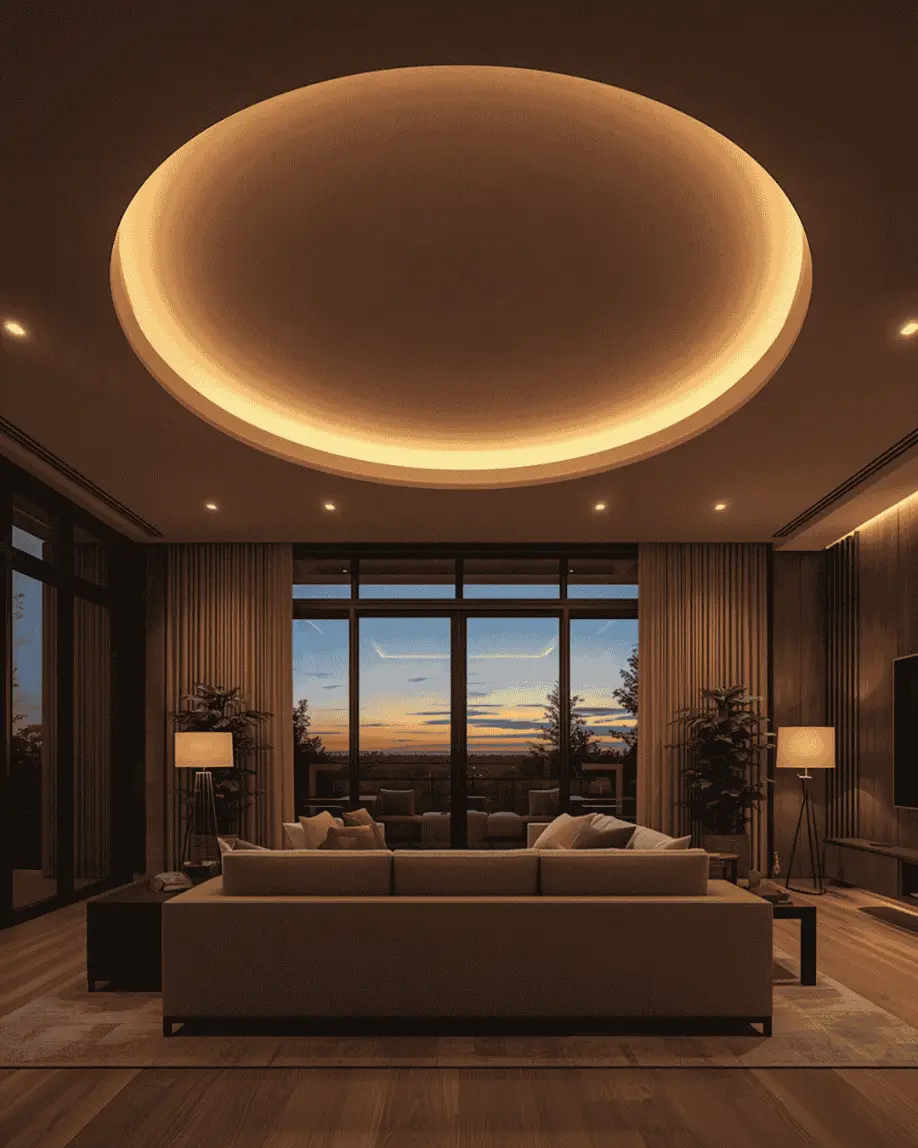
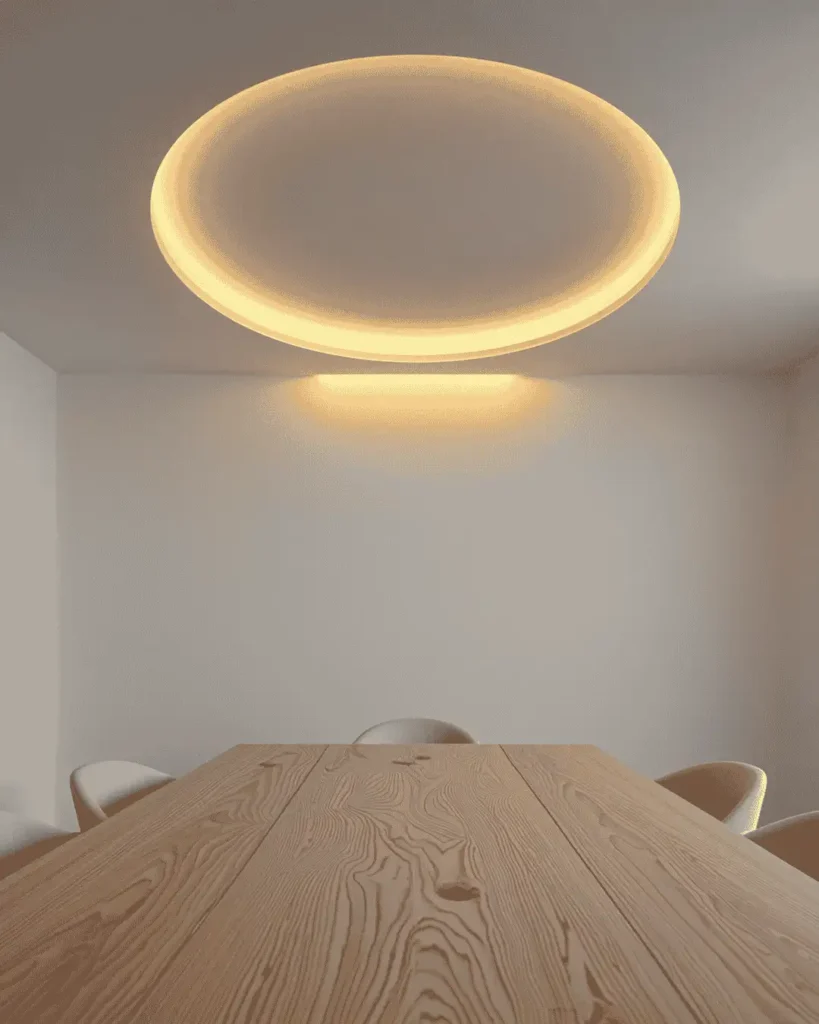
One circular tray over a dining table or seating area gives the room a clear focal point instead of competing details. Keep the ring close to the width of the furniture below it, or it reads as random rather than designed.
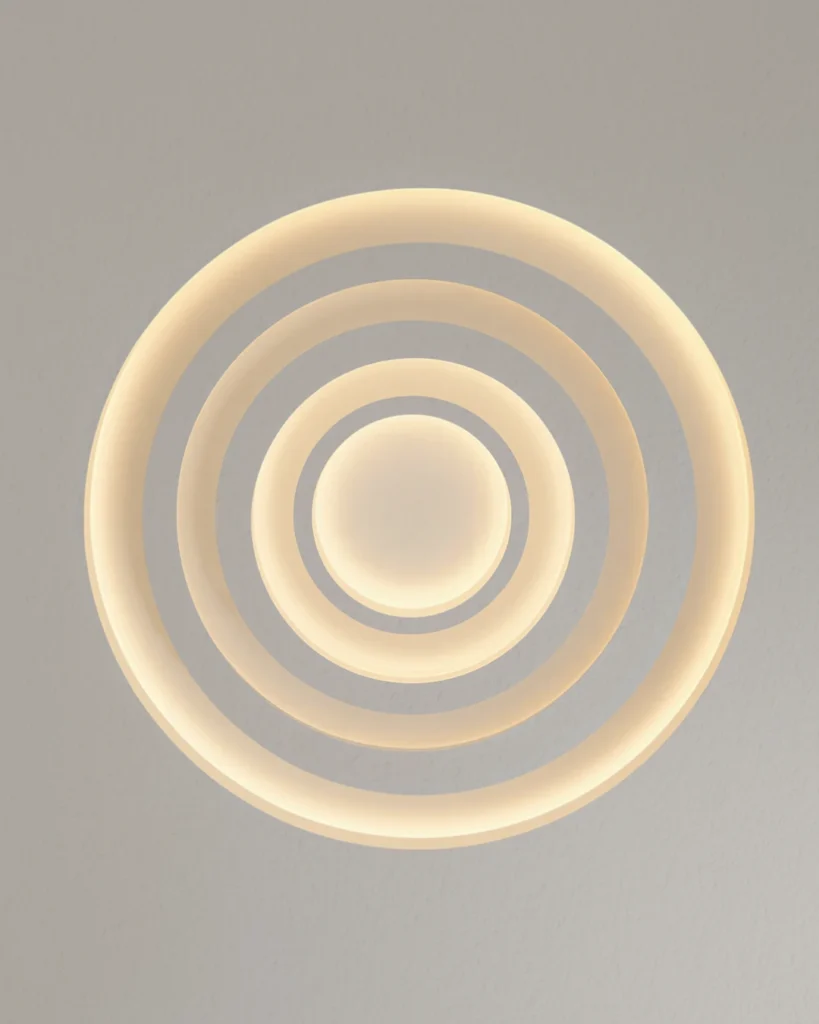
2. Or Stack a Few Circles
Three nested rings, stepping down slightly toward the center, add real depth without any color or pattern. This only works with at least 9-foot ceilings—anything lower and the steps disappear.
3. Swap One Big Light for a Cluster
Three small pendants at slightly different heights inside a recessed tray look far more custom than one centered fixture. Space them 30–36 inches apart for the cleanest line.
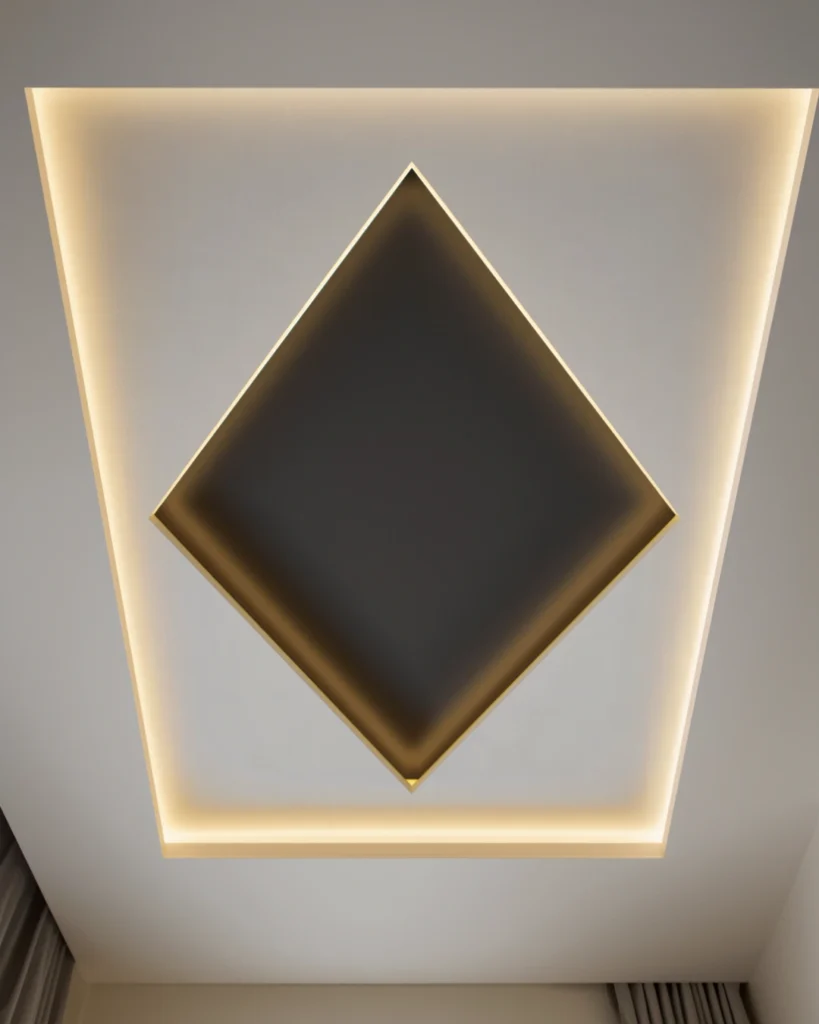
4. Try Angles Instead of Curves
A diamond-shaped tray with a dark inset panel suits a modern home better than a soft ring does. Keep the dark color to just the inset—paint the whole tray dark, and the ceiling feels lower, not more dramatic.
5. Never Break the Light Strip
A gapped cove light draws the eye to the gaps, not the ceiling shape. One continuous LED strip, one color temperature, no exceptions.
6. No Construction Budget? Fake It
Crown molding mounted a few inches below the actual ceiling, with an LED strip hidden behind it, gives renters and budget remodelers the same glow effect as a real recessed tray—no drywall work required.
This is the one trick most tutorials skip because it’s not a “real” tray ceiling, but it’s the version most apartment dwellers can actually do.
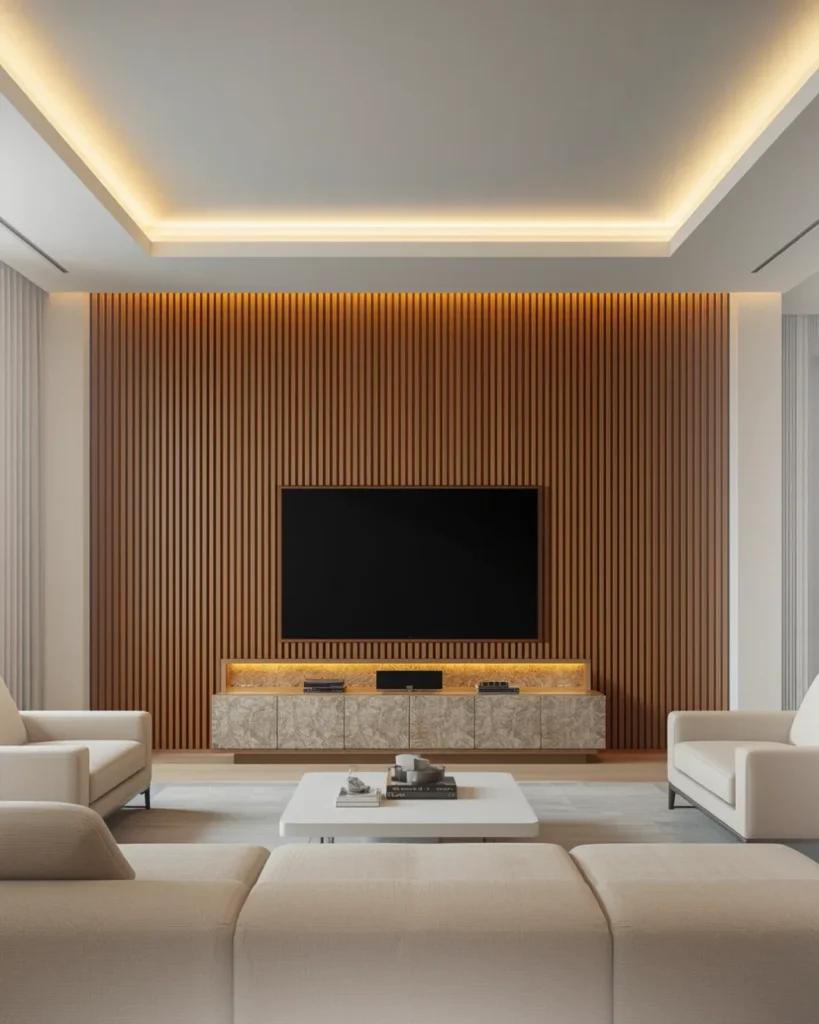
7. Frame What’s Already on the Wall
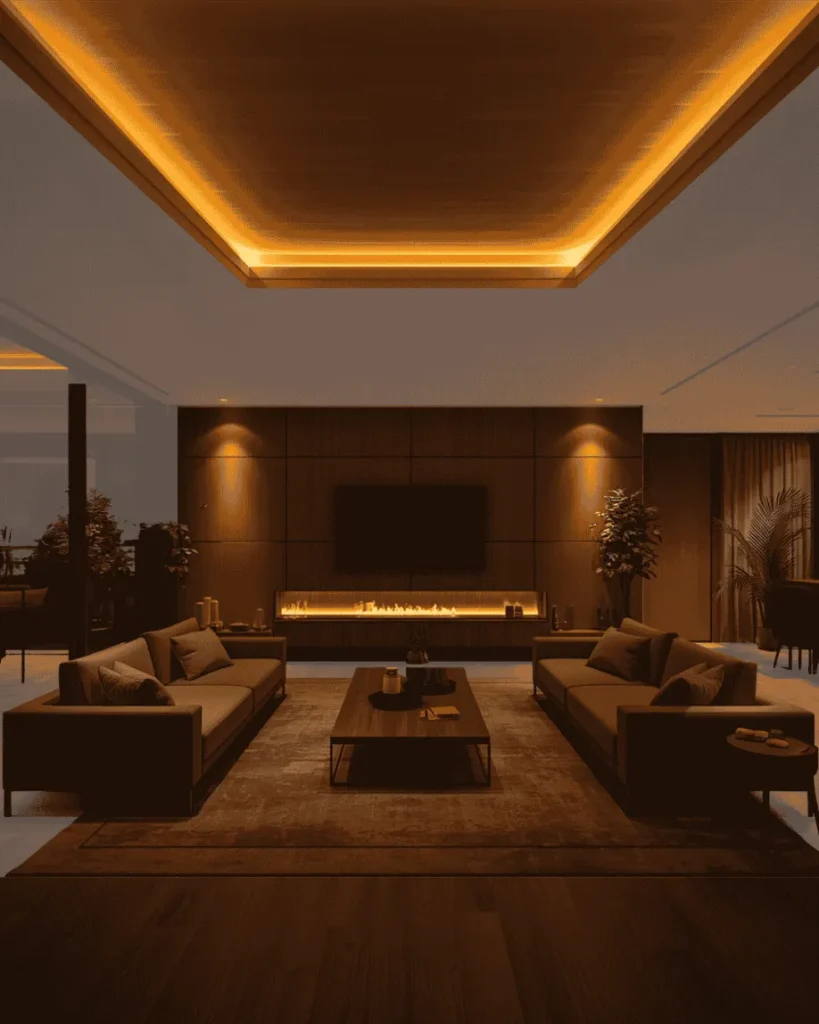
A rectangular cove border that matches the width of your media wall or headboard ties the ceiling to the room instead of floating above it as a separate decision.
8. Add Motion With Radial LinesFrame
Thin lines running outward from a center point work well in entryways and dining rooms, where people glance up briefly. In a bedroom, the same lines can feel busy at night.
9. Go Subtle in Small Rooms
Under 150 square feet, skip the multi-tier look entirely. One thin perimeter cove makes a small ceiling feel higher—a big tray in a small room does the opposite.
10. Match Light Color to Paint Color
Pure white paint under warm 2700K light can look faintly yellow instead of warm. If you want bright white, use 3000–3500K lighting so the color doesn’t shift.
11. Put It on a Dimmer
A cove light at full brightness looks like a tube outline, not ambiance. A dimmer is the cheapest upgrade on this entire list.
12. Pick One Shape, One Technique
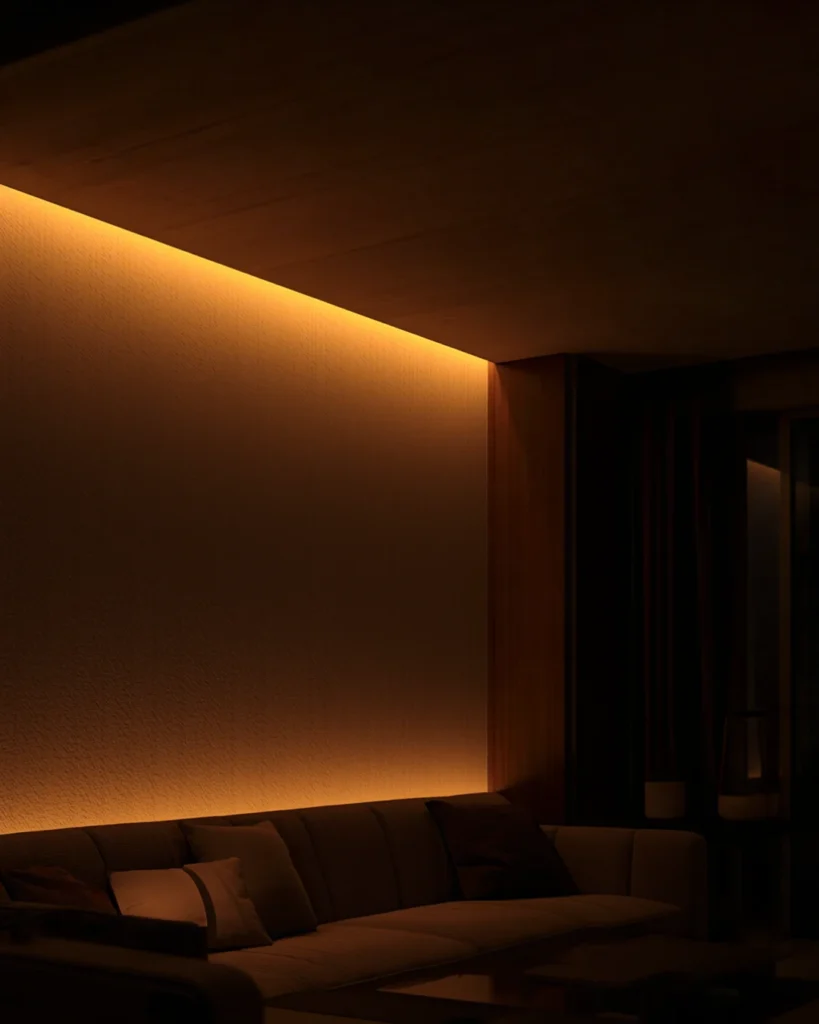
The designs that actually look expensive combine one shape (ring, diamond, or rectangle) with one lighting method—not three techniques stacked on top of each other.