2700K vs Cool White Christmas Lights: Which One Should You Buy?
2700K vs Cool White Christmas Lights: Which One Should You Buy?
Your garland can be perfect and your tree can be perfect, yet the room still feels cold. Most of the time, the lights are the problem.
Quick summary:
| Light | Feels like | Best for |
|---|---|---|
| 2700K warm white | Candlelight, firelight | Living room, mantel, tree, entryway |
| 3000K soft white | Warm, slightly brighter | Kitchens, busy family rooms |
| 4000K+ cool white | Daylight, slightly blue | Outdoors, snow themes, modern rooms |

Warm 2700K light is the single biggest reason a decorated room feels cozy instead of cold.
The Real Problem: Warm White That Glows Blue
- Check the printed number, not the label. A box can say warm white and still glow blue. Real buyers call it hospital blue.
- Look for 2700K on the box or the tag near the plug. If no number is printed, do not buy it in bulk.
- Buy one strand first. Switch it on at night, next to a candle or a warm lamp. Blue next to candlelight means it is cool white.
- Try the white mug test. Photograph one lit strand at night beside a plain white ceramic mug. The mug shows the true colour.
What 2700K Actually Means
- K means Kelvin, the scale for light colour. Lower is warmer and more yellow. Higher is cooler and more blue.
- A candle is about 1800K. An old incandescent bulb is about 2700K. Midday daylight is about 5500K.
- 2700K feels like firelight. Your eye already knows this light from lamps, candles and fires. That is why it relaxes you.
- Cool white feels like an office. At 4000K and above, it brings that same cold feeling into your living room.
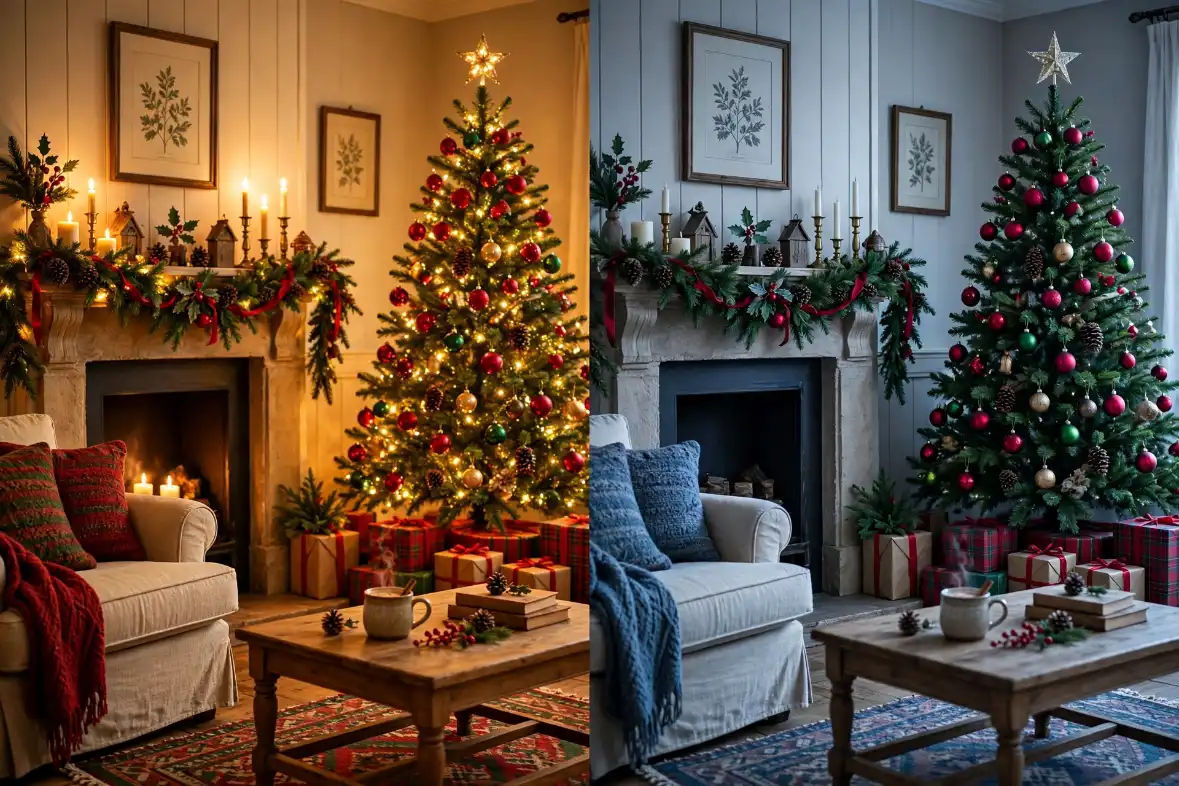
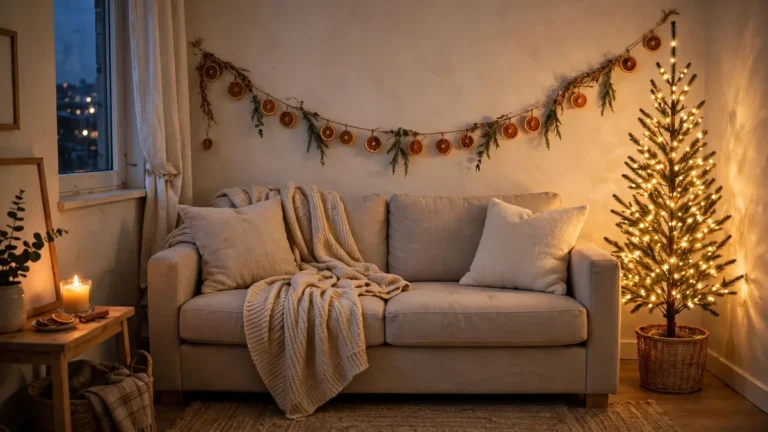
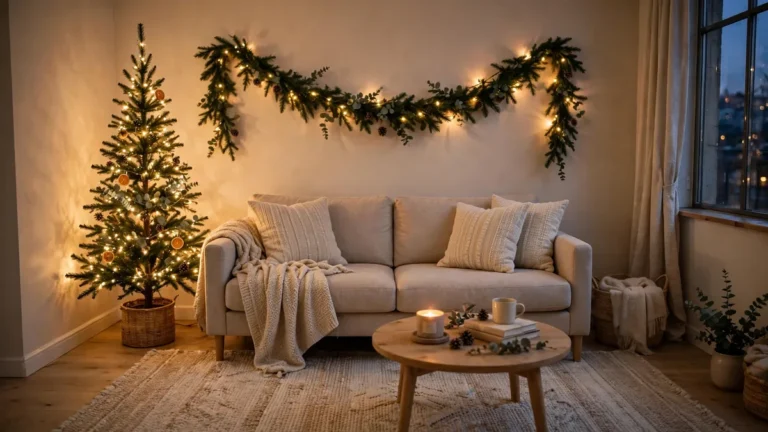
Left: 2700K warm white, cozy and rich. Right: cool white, the same room but flat and blue.
When Cool White Actually Works
- Snow and ice themes. White, silver and blue decor looks complete in cool white.
- Roofline and outdoors. Cool white reads crisp from the street and makes snow sparkle.
- Modern, minimal homes. White walls, chrome and glass can carry cool white well.
- Everywhere people sit, warm wins. Living room, tree, mantel and entryway all feel better in 2700K.
One Temperature Per Room
- Pick one temperature for each room. Tree, mantel, garland and window all match in that room.
- Buy all strands at once, one brand, one batch. The same brand next year can look green or pink.
- Buy 10 to 15 percent spare. A matching spare is worth more than a bargain that does not match.
- Never mix on one tree or one mantel. Move cool white strings to the porch or a hallway instead.
Room by Room
Living Room: Warm, Low, Layered
- Use 2700K everywhere here. Brightest string on the tree, a dimmer one in the mantel garland, a small one on a side table.
- Light at three heights. Low, middle and high beats one bright string every time.
- Switch the ceiling light off in the evening. It flattens everything the string lights are doing.
Mantel: Weave, Do Not Drape
- Weave the string through the garland. Bulbs inside the greenery glow out of the leaves. Bulbs on top just glare.
- Garland 1.5 to 2 times the mantel length. A 6 ft mantel needs 9 to 12 ft of garland.
- About 100 lights per 6 ft of garland. One 25 ft warm string is usually enough for a standard mantel.
Christmas Tree: Inside Out, Bottom Up
- Start at the bottom and work up. Weave in and out so half the bulbs sit deep inside the tree.
- 100 lights per foot of height. A 6 ft tree takes about 600 lights, about 150 ft.
- Count before you buy. A short string means a dark gap at the top.

Weave lights inside the branches, not just around the outside. That is what gives a tree depth.
Entryway: Small, Warm, Welcoming
- One short warm string is enough. On a wreath, a garland, or in a lantern with LED candles.
- Two strings will glare in a small space. Warm plus one warm lamp beats a bright cool strand.
Outdoors: Cool White Earns Its Place
- Split it. Cool white on the roofline for street visibility, warm white on the porch and tree.
- Warm flatters brick, wood and greenery. Cool wins on snow, white siding and modern exteriors.
- Outdoor rated strings only. Keep connections off the ground.
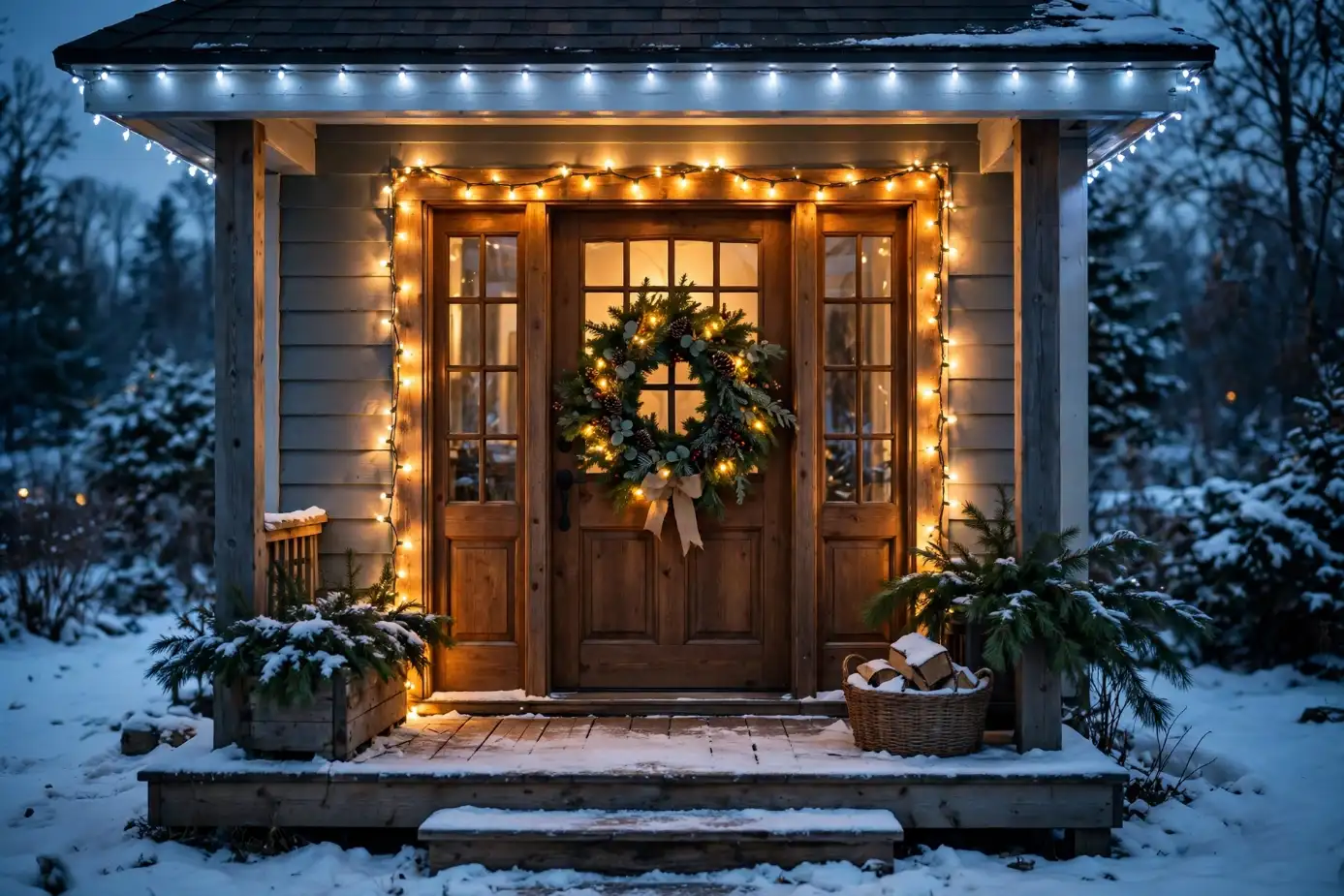
Entryway rule: one warm source is enough. It welcomes guests without glaring.
5 Mistakes That Make Lights Look Cheap
- 1. Trusting the label. Warm white on the box, blue light in the room. Check the Kelvin number first.
- 2. Mixing temperatures in one sightline. Warm tree plus cool garland always looks accidental.
- 3. Wrong scale. Too many lights in a small room, too few on a big tree.
- 4. Running at 100 percent all night. Harsh and wasteful. Use a timer.
- 5. No test before hanging. Plug each strand in first to check for dead bulbs or wrong hues.